Saturday, May 15, 2010

Heart of God Saturdays: Psalm 4

Psalm 4 (English Standard Version)

To the choirmaster: with stringed instruments. A Psalm of David.

1Answer me when I call, O God of my righteousness!
You have given me relief when I was in distress.
Be gracious to me and hear my prayer!

2O men, how long shall my honor be turned into shame?
How long will you love vain words and seek after lies?
Selah

3But know that the LORD has set apart the godly for himself;
the LORD hears when I call to him.

4Be angry, and do not sin;
ponder in your own hearts on your beds, and be silent.
Selah

5Offer right sacrifices,
and put your trust in the LORD.

6There are many who say, "Who will show us some good?
Lift up the light of your face upon us, O LORD!"
7You have put more joy in my heart
than they have when their grain and wine abound.

8In peace I will both lie down and sleep;
for you alone, O LORD, make me dwell in safety.

Friday, May 14, 2010

Homeschool Co-op Creation Seminar


Last Friday's Creation Seminar for a Homeschool Co-op went well. There were ten students scheduled to come, and everyone was able to make it out. The seminar covered a broad range of topics, though the Genesis Flood was a central theme. The students especially enjoyed the Flood Initiation clip which shows a hypothetical model of the fountains of the great deep breaking open.

We appreciate all of the donations, and may God continue to open up doors within various homeschool organizations in the future.

For all of the notes, click here.

For Session 1: Worldview Clash In Genesis Modern Lie: Naturalism = Science; Intelligent Design = Religion audio, click here.
For Session 1 Power Point slides, click here.

For Session 2:The Flooded Globe Washes Away Eons Modern Catastrophes Provide Insight Into The Genesis Flood audio, click here.
For Session 2 Power Point slides, click here.

For Session 3: The Post-Flood World To Christ The Ice Age, Language Confusion, & Diverse People Groups audio, click here.
For Session 3 Power Point slides, click here.

Thursday, May 13, 2010

ESL

I continue to enjoy teaching ESL on Thursdays, and may God continue to grant perseverance in that. My wife and I had one family over a couple nights ago, and everyone seemed to have a good time. I pray we are able to continue to develop a friendship with these folks, and may God bless them as they continue to make inroads in this new land they find themselves in. Most of all, may God open the eyes of their heart to see the glorious light of the gospel of Jesus Christ! Amen!

Sunday, May 9, 2010

The Farmer's Garden: Moisture Check

Baby Corn Plants

Moisture content is one of the highest priorites to keep tabs on; after all, plants suffer with too much or too little water. Here are some easy ways to check moisture content in your garden and resolve any potential hazards.

1.
Scratch the ground near the plants. If the soil feels moist after a couple inches (inch or two for very young tiny plants), the plants probably don't need watering. During prolonged periods of heavy rain, the ground can become quite saturated, so don't feel like you're not watering enough when the ground is clearly still moist. If you have to dig more than two-three inches to reach some kind of moisture, your plants probably need watering.

2.
Watch for yellowing of leaves. Most garden plants bear perky brilliant green leaves, so if they start to turn yellow, something is wrong, and it is probably due to drought or drowning. If the moisture content is too high, then plant leaves will start to turn yellow and probably start to sag a bit. Scratching the ground will clue you in on that (see #1). If the ground is quite dry, then the plant is probably suffering from drought, so it needs watering. If it is really dry, and the ground is very hard, don't flood the garden. The ground needs to be moistened first so that it will actually absorb the water and not run off somewhere or form a 'small pond' that attracts unwanted critters and possible mold growth at the base of the plant. Also, if the ground is hard and the plants cannot sway much without snapping, heavy watering can cause them to snap as they bend under the high pressure before the ground can loosen up to prevent this. Therefore, give it a slow evening soak.

3.
Watch for mold growth. If you notice mold or other fungi growth on the plants or on the ground near the plants, your garden is too wet. Do not water it, or you will make it worse. Let the sun dry your garden out.

4.
Watch for flimsy plants. As plants grow taller, they will sway without support structures. However, if your plants appear to totter easily, that's a sign that the ground is highly saturated. Don't water, and let the sun and breeze dry things out.

5.
Watch for burn spots and browning of the leaves at the ends. Burn spots can be large or small, and they tend to be brown or reddish brown. This can also occur around the edges or at the tips of the leaves. This indicates that your plants are not receiving enough water, so scratch the ground. If the ground appears moist, then it may just be the intense heat of the summer, and your plants may be at the end of their harvesting cycle.

6.
Watch for cracking or splitting of the stems. If the plants begin to split and crack open a lot, they're probably not receiving enough water. However, as indicated in #5, they could be at the end of their harvest cycle due to intense heat.

If a plant doesn't have enough water, it's not that hard to put water on, but it is hard to take it off. As my Daddy would say, "You can put water on, but you can't take it off." What he means by this is that it is much easier to irrigate than to keep the plant from drowning if the rains are relentless. I always prefer a drier year than a wetter year for that very reason; I'd rather do the work of irrigating that watch my plants drown. Therefore, prior preparation is critical when heavy prolonged rains come. Here are some suggestions:

1.
Stay up do date on the weather. One of the worst combinations is heavy rain, high winds, and hail. The rain loosens the soil, and then heavy winds and hail beat the plants to death and/or blow them down causing catastropic damage if severe breakage occurs. By knowing when rains are coming several days in advance, you can do your garden favor by 1) having good structural supports, and 2) by not watering it when you know the wind is probably going to come right after that. If I perceive heavy rains are coming a few days out, I'll let the soil dry out a bit just to prepare for the rains. However, you don't want the ground to be rock hard either, for heavy wind and hail will snap plants off at the base. Soil that has a good balance between wet and dry will allow the plants to sway so as not to snap while at the same time be firm enough to withstand the wind and hail when it comes.

2.
Plant on a slight (emphasis on slight) inline with high hilled rows that run parallel with the incline to help direct the flow of water out of the garden.

3.
If your area is relatively flat, high hilled rows are even more critical. Not only do high hilled rows keep moisture in the plant and support the plant in general, but they really help to reduce flooding damage.

4.
If you are planting in raised boxes, of which I have several this year, pile as much dirt as you can so that the box is less likely to develop 'small ponds'. Hills are just as needed here as well. I filled my boxes up to the brim, and I added more in some areas once the garden settled a bit more. In spite of all the heavy rain here of late, my boxes have not suffered from a lot of 'ponding'.

5.
If your area of the country is prone to heavy rains, plant with greater density. The more plants you have in a given space, the more water they will need, so they will naturally need more water as they compete with each other which will most likely reduce drowning problems. If it does turn out to be a dry year, you'll just have to water more or simply thin out your plants. However, don't plant everything so close that your plant stems cannot develop properly.

6.
Sandy soil will tend to retain less moisture, so mixing a bit in your garden is helpful if the area is prone to regulary heavy rains.

7.
Clay soil will tend to retain more moisture, so high hilled rows on an incline or filled to the brim boxes are a must.

8. When you do irrigate, don't do it in the middle of the day if at all possible. Not only will the ground retain less of the water because of high evaporation rates, but it can also cause the roots to burn. Burning can occur as the roots detect moisture and immediately reach to the top but then are burned by the sun as they approach the area just below the surface. This can especially occur when it is dry and the plants receive a light shower and then high heat bears down on them from the sun right afterwards.

Ultimately, the Lord brings a good harvest, and a primary means by which this happens is acknowledging our dependence on Him and then following up on that with good stewardship to His glory! Amen!

Sunday, May 2, 2010

The Farmer's Garden: Baby Your Plants!

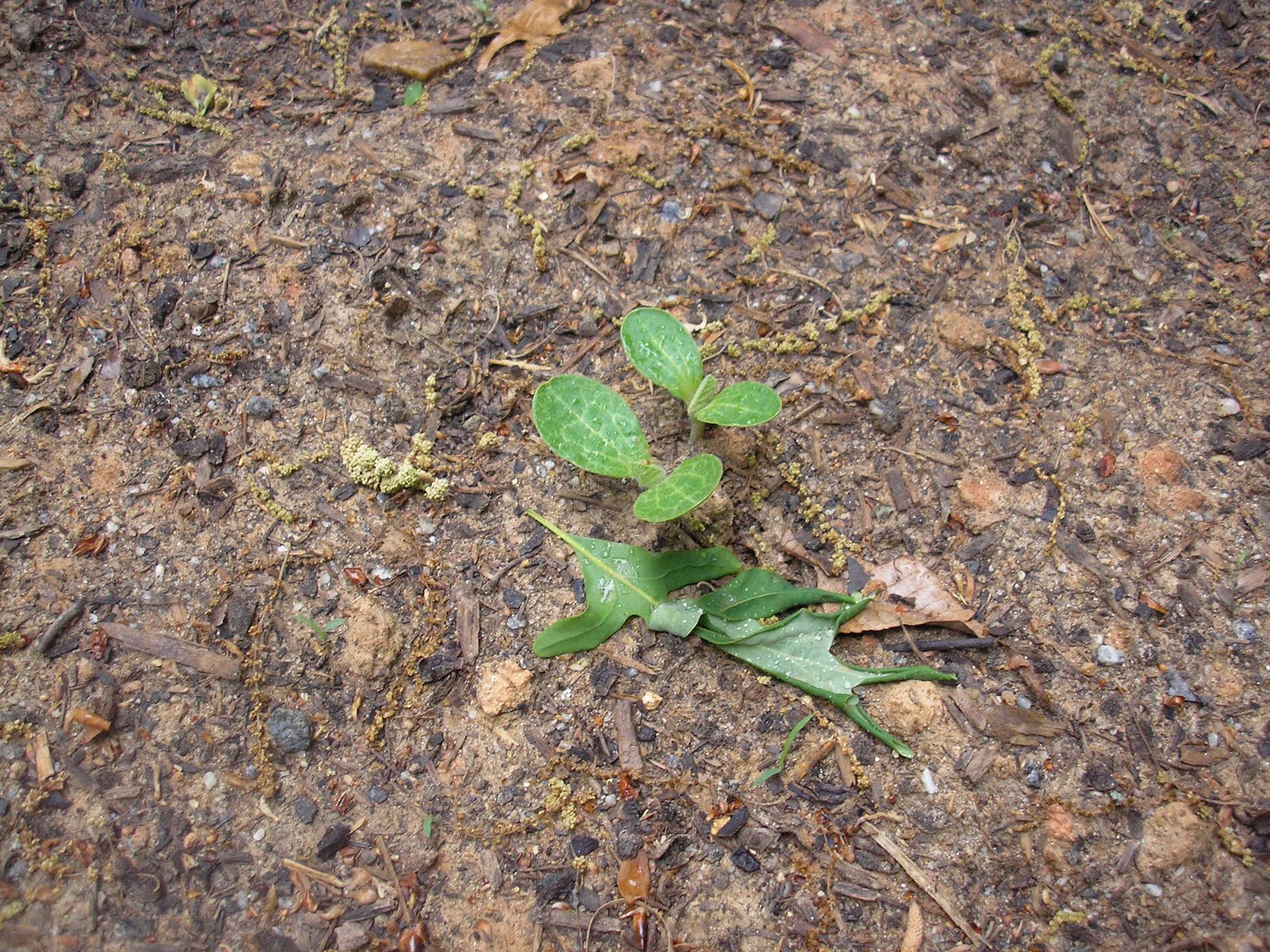
Baby Squash

Baby tomato plants, Moriah. Be gentle!
Beginning of April

Growing A Bit: 2nd-3rd Week Of April

Garden crops are like children: they are needy! They get hungry, thirsty, hot, and cold. Wind and hail bear upon them. Weeds ravage them, and critters consume them. Whew! That's a tough life!

It is true that some things grow relatively easy, but most of the vegetables and fruits that we desire tend require steadfast labor because they are so needy. Therefore, if you don't baby your plants, they will not produce much and may even produce nothing. How sad :(

I call it babying your plants; the Bible calls this good stewardship. Tending the garden was work from the very beginning, yet it was far more pleasant and easy without all the potential disasters looming every minute of every day.

Here are some key ways to baby your plants, and, by all means, let the kids help:
1. Pray, pray, pray that God will bless your work, work, work.
2. Check on them every day and even twice a day if at all possible.
3. Different plants require different amounts of sunshine; plant accordingly.
4. Be aware of the forecast, and prepare your garden ahead of time.
5. Be watchful for dry or swampy soil; moisture content is critical for their health.
6. Take note of critter tracks and/or bug bites; a fence or some bug spray (organic or conventional) may be required.
7. If you see yellowing of the bright green leaves, this usually means something is wrong: either or too dry or too wet, so check the moisture content of the ground.
8. Ensure that your plants have strong supports if needed.
9. Keep them fertilized whether with organic or conventional methods.
10. Finally, don't let those weeds get out of control; pull them as soon as you see them!

A great garden does take work, but the end rewards are worth all the work. Not only is the final harvest fresh and healthy, but it is also economical because you will be able to store up for the winter through canning, freezing, drying, etc.

Ultimately, God alone can make something grow. Therefore, let us praise Him and bask in His glory as He blesses the fruit of our labor according to His good pleasure! Amen!